
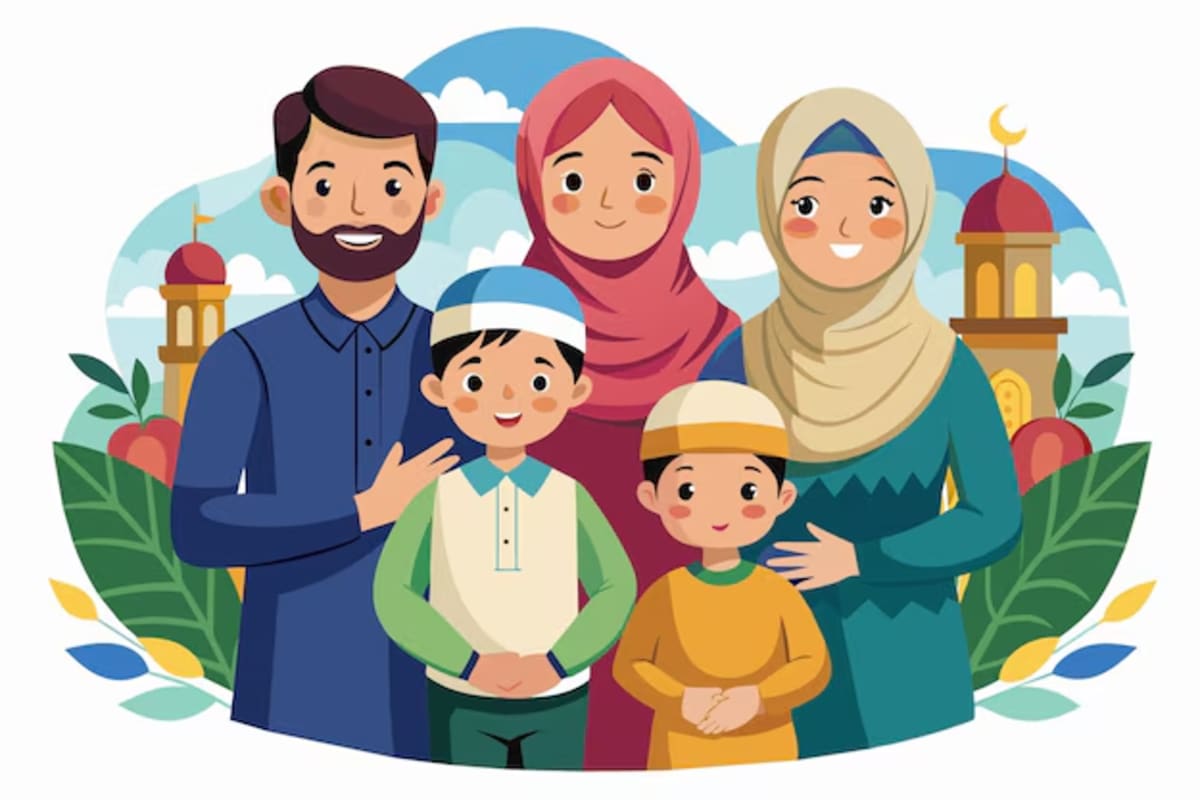
Building Strong Muslim Families in the West!!!!
Practical advice on raising children with Islamic values while navigating the challenges of living in Western societies.
Building Strong Muslim Families in the West
Raising a Muslim family in the West is both a blessing and a responsibility. Muslim parents today are not only raising children — they are raising identities. Our children grow up in environments that often differ from our values, language, and traditions. They attend schools where Islam is unfamiliar, consume media that promotes individualism, and interact daily with ideas that may contradict their beliefs. The goal, therefore, is not isolation, but grounded confidence: children who understand who they are and feel no need to apologize for it.
The challenge is not that Western societies are inherently hostile. The real challenge is subtle: faith slowly becomes optional, culture replaces religion, and practice becomes symbolic instead of lived. Many Muslim parents discover too late that simply telling children “we are Muslim” is not enough. Islam must be experienced, not only instructed.
1. Your Home Is the First Madrasa
Children do not learn Islam primarily from lectures, mosques, or weekend schools. They learn it from watching you.
If prayer is rushed, they learn prayer is unimportant.
If Quran is only recited in Ramadan, they learn Islam is seasonal.
If parents lie casually, argue harshly, or show poor character, children associate religion with hypocrisy.
The Prophet ﷺ taught Islam through character before instruction. Your home must reflect that same principle.
Practical steps:
- Pray at least one daily salah together as a family
- Let children see you read Quran (not only tell them to)
- Make du’a aloud so they learn how to speak to Allah
- Say “Bismillah” and “Alhamdulillah” naturally in daily life
- Apologize when you make mistakes — this teaches Islamic humility
A child who grows up seeing Islam lived will rarely abandon it.
2. Build Identity Before Teen Years
Most parents begin worrying about religion when their child becomes a teenager. By then, identity is already formed.
In Western environments, children begin asking deep questions around ages 7–10:
- Why can’t I date?
- Why do I pray?
- Why are we different?
- Why does my mother wear hijab?
If parents only respond with “because Islam says so,” the child will eventually seek answers elsewhere — and the internet will answer them.
Instead, teach meaning:
Explain why we pray → connection with Allah
Explain why hijab exists → dignity and modesty
Explain halal/haram → discipline and purpose
Children who understand reasons develop conviction. Children who memorize rules develop resentment.
3. Control the Environment (Without Controlling the Child)
Many families make one of two mistakes:
Total restriction → child rebels
Total freedom → child assimilates
The solution is guided exposure.
You cannot raise children in a bubble in the West. They will interact with different cultures, beliefs, and lifestyles. Your role is not to prevent exposure — it is to prepare interpretation.
Practical approach:
- Watch shows together and discuss messages
- Explain respectfully why Muslims believe differently
- Teach them how to politely disagree
- Give them language to answer peers
Your child should know how to say:
“I respect you, but my religion teaches me something else.”
Confidence protects faith more than isolation.
4. The Mosque Alone Is Not Enough
Weekend Islamic school is helpful — but it cannot replace parenting. A child spends roughly 2–3 hours per week in the mosque and over 40 hours per week in school and media environments.
If Islam only exists in a building, it becomes a location, not a way of life.
Instead:
- Celebrate Islamic holidays more joyfully than secular ones
- Make Eid feel bigger than birthdays
- Create family traditions around Ramadan
- Share stories of the Prophets at bedtime
Children stay connected to what feels emotionally meaningful.
5. Choose Friends Carefully
The strongest predictor of a child’s long-term religious practice is their friend group.
In the West, peer acceptance is powerful. A child who is the only practicing Muslim among friends will feel pressure to compromise — not because they want to, but because they want belonging.
Help your child build Muslim friendships early:
- Islamic camps
- Quran circles
- Community sports teams
- Youth programs at the mosque
You are not choosing friends for them — you are shaping their environment around them.
6. Teach Islam With Mercy, Not Fear
Some children grow up associating Islam only with punishment:
“Allah will punish you if you don’t pray.”
This produces compliance, not love.
The Prophet ﷺ first taught:
- Allah is Merciful
- Allah listens
- Allah forgives
When children love Allah, they want to obey Him.
When they only fear Him, they obey only while watched.
7. Accept That Their Experience Will Be Different From Yours
Many parents immigrated from Muslim-majority countries. Their children are not growing up in those societies. Expecting identical behavior creates tension.
Your child is not becoming less Muslim by:
- speaking English more fluently than your native language
- asking questions
- thinking critically
In fact, questioning can strengthen faith if answered with patience.
Your goal is not to recreate your childhood.
Your goal is to raise a Muslim adult who can stand firmly in their world.
Conclusion
Raising Muslim children in the West is not about protecting them from society — it is about equipping them for it. Faith today cannot survive on inheritance alone; it requires understanding, love, and intentional parenting.
Strong Muslim families are not built through strictness or fear. They are built through presence, consistency, and example.
If your child sees Islam as a source of peace at home, guidance in decisions, and dignity in identity, then even in a distant land, they will always know where they belong.
And that is success.